Learn the DGC Framework for demand generation: a systematic approach to building content that drives pipeline growth through three strategic phases.

Updated on
2026-01-22
Your marketing team feels stretched thin. You need consistent blog content to rank in search and drive leads. But your options feel impossible.
Hire a content person? That's expensive. Manage freelancers? That's chaotic. Use AI tools alone? That's unreliable.
Meanwhile, your sales team complains they don't have the content they need to close deals. And your blog posts sit in a silo. Nobody knows which ones actually drove pipeline growth.
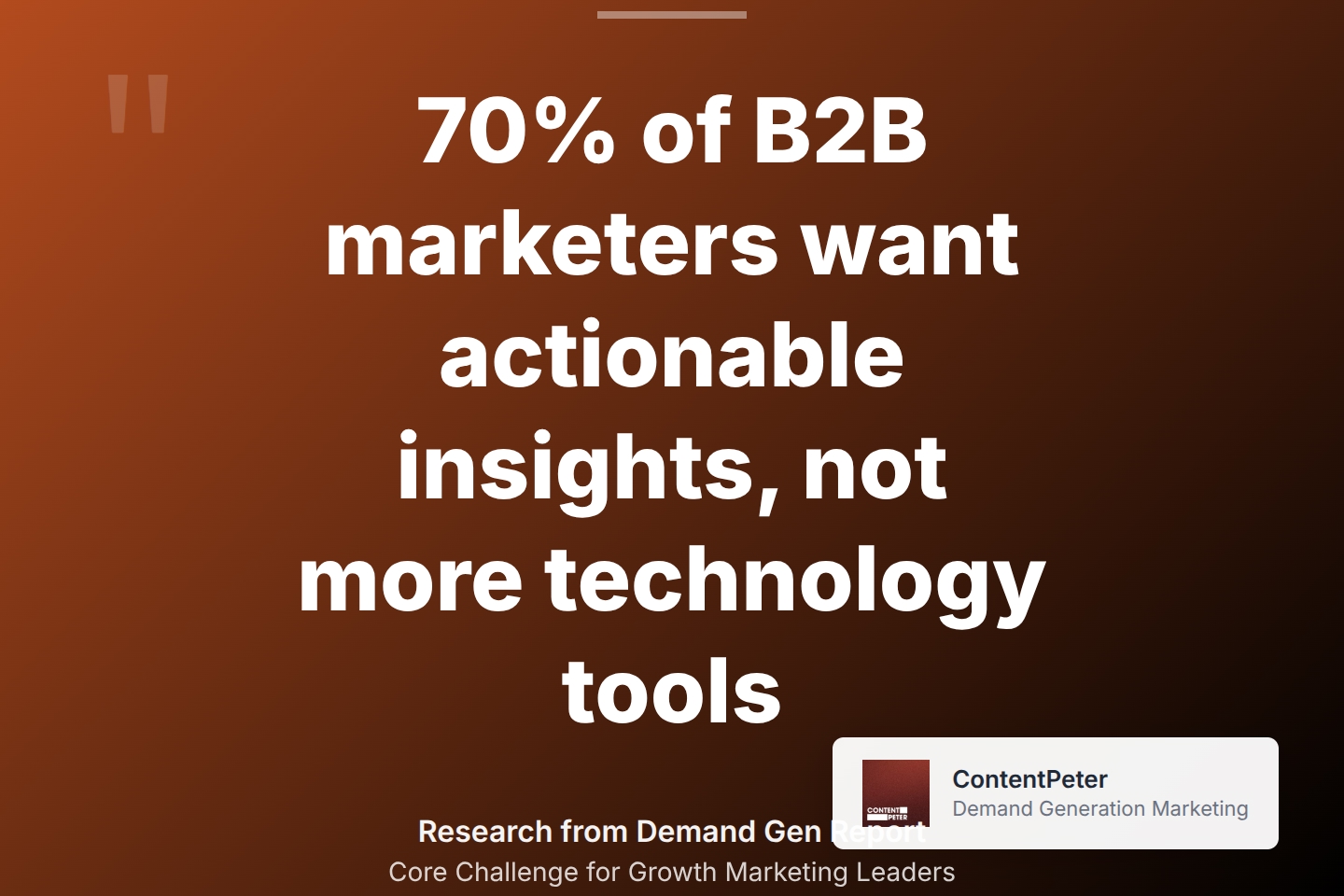
You're not alone. Research from Demand Gen Report shows that 70% of B2B marketers want actionable insights, not more technology tools. They want to know what actually works.
The real problem isn't your tools. Demand generation is fragmented. Content, email, paid ads, and sales enablement don't talk to each other. Nobody has a clear system showing how content actually drives pipeline.
That changes today.
There's a better way to think about content. It's not just about blogging. It's about building a system where each piece of content plays a specific role.
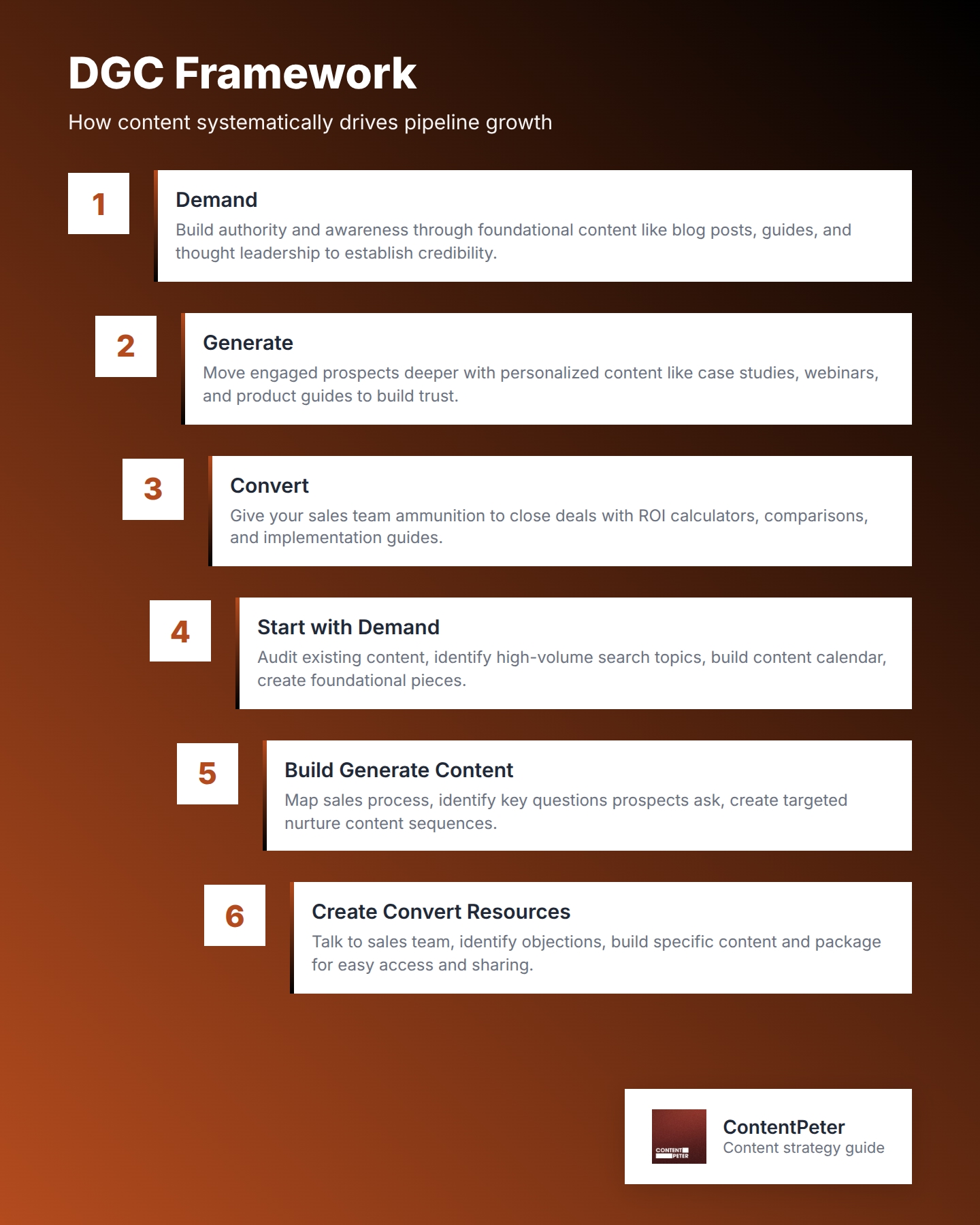
We call it the DGC Framework: Demand, Generate, Convert.
Demand builds your authority and gets people to notice you. This is your foundational content (blog posts, thought leadership articles, educational guides). It's designed to rank in search, get discovered, and position you as a trusted resource.
Generate moves engaged prospects deeper. This is personalized content that speaks to their specific problems (webinars, case studies, detailed product guides). It's designed to educate and build trust.
Convert gives your sales team the ammunition to close deals. This is sales collateral (ROI calculators, buyer comparisons, implementation guides). It's designed to remove objections and push deals across the finish line.
Each phase connects to the next. Demand content captures attention. Generate content builds engagement. Convert content closes deals.
This system replaces scattered efforts with a clear strategic map. Now you know exactly which content type drives which result.
Let's start at the top of the funnel.
This is where you build foundation-level content. Content that gets discovered. Content that establishes credibility. Content that makes prospects think, "This company knows what they're talking about."
Inbound marketing produces 54% more leads than outbound approaches alone, according to Lead Forensics. Buyers are already researching solutions online before they contact any sales team.
You want to be the resource they find.
Content marketing and thought leadership remain the most effective demand generation channel. Research from Studio by Informa TechTarget shows that 47% of marketing leaders rank content as their most successful demand generation tactic.
There's one catch: In 2025, SEO requires a dual focus. You need discoverability. You also need authority. Your content must be deeper and more valuable to compete with AI tool summaries that buyers now use.
Also, 72% of buyers prefer engaging with brands through multiple channels. Your blog post can't stay locked in a blog silo. It needs to become social posts, videos, email snippets, and more.
Build content around high-volume search topics. Create foundational guides that answer common buyer questions. Publish thought leadership pieces that showcase industry expertise.
Examples include:
- Blog posts optimized for search (1,500–2,500 words)
- Beginner's guides and frameworks
- Industry trend analysis
- Educational webinars and videos
- Social media content (repurposed from blog)
- LinkedIn carousels and Twitter threads
Most companies create content without understanding what buyers are actually searching for. They write about what they want to talk about, not what prospects need to know.
Result: Blog posts get written. Nobody finds them. They don't drive leads.
The fix is simple. Research what your buyers are actually searching for. Build content around those topics. Optimize for both search engines and AI tools (like ChatGPT and Perplexity) that buyers now use to research solutions.
Then repurpose that content across multiple channels. One blog post becomes five LinkedIn posts, two Twitter threads, and one video short. Now your content works everywhere your buyers search.
Demand content captures attention and builds awareness. But awareness alone doesn't drive pipeline. The next phase converts that awareness into engagement.

Now you've captured their attention. They know who you are. The question is how to move them deeper into the buying process.
This is the Generate phase.
Content personalization is the top factor that improves lead nurturing. Research from Demand Gen Report shows that 52% of B2B marketers cite personalization as their top priority for nurturing leads.
Here's what else matters: Email remains the dominant lead generation channel. 66% of B2B marketers say email drives their lead generation results.
But personalization doesn't mean sending generic emails to a massive list. It means content that speaks directly to the prospect's specific situation, industry, and challenge.
The goal is clear. Give buyers the content they need to understand your solution. Build trust. Move them toward a conversation with sales.
Build content around buyer pain points and specific use cases. Create case studies showing results. Publish product guides. Host webinars. Develop comparison resources.
Examples include:
- Case studies and success stories
- Detailed product guides and tutorials
- Buyer comparison tools
- Industry-specific webinars
- Customer testimonials and reviews
- Email nurture sequences
Companies treat Generate content as an afterthought. They focus on top-of-funnel blog traffic. Then they wonder why leads don't convert to pipeline.
The fix is intentional. Build a nurture strategy that moves prospects from interest to buying intent. Use email, personalized content, and multi-touch sequences.
Align this with your sales team. They need to understand which content prospects are engaging with. This tells them how far along the buyer is in their journey.
Generate content builds trust and buying intent. But intent alone doesn't close deals. Your sales team needs specific resources to overcome objections and move deals across the finish line.
That's what the Convert phase does.
Your prospect is ready. They're interested. They're considering buying.
Now they have questions. Objections. Concerns.
Your sales team needs the right content to address each one.
The goal of demand generation is straightforward. Give your sales team the content they need to speak intelligently and close more deals.
Research from Lead Forensics emphasizes this. Sales and marketing teams must integrate their programs. They must maximize knowledge sharing. They must use lead scoring data to know which prospects are ready.
When sales and marketing don't align, deals fall apart. Prospects get lost. Content doesn't reach the right person at the right time.
Build content that directly addresses buying objections. Show ROI clearly. Compare your solution to alternatives. Provide implementation roadmaps.
Examples include:
- ROI calculators and pricing breakdowns
- Buyer comparison guides
- Product demos and walkthroughs
- Implementation timelines
- Contract and legal resources
- Customer testimonials from similar companies
Sales teams don't know what content exists. Marketing teams don't know what objections sales is hearing. Content sits in a drive somewhere. Deals stall.
The fix requires communication. Marketing must package and share Convert content with sales. Sales must tell marketing what questions prospects are asking. Content must be easily accessible and searchable.
When this works, deals move faster. Sales closes more business.
Convert content closes deals. Those deals become customers. Those customers can become case studies and testimonials. Those become part of your Demand phase content.
The cycle repeats. Your system strengthens.
The DGC Framework works because it mirrors the actual buyer journey (awareness, consideration, decision).
But knowing the framework is different from implementing it.
Here's what to do:
Start with demand. Audit your existing blog content. Identify high-volume search topics in your space. Build a content calendar around those topics. Create 4–8 core foundational pieces. Repurpose each one across social channels.
Build generate content next. Map your sales process. Identify the key questions prospects ask at each stage. Create targeted content that answers those questions. Develop nurture email sequences. Connect content to your email platform so prospects receive the right piece at the right time.
Create convert resources last. Talk to your sales team. Ask what objections they hear. Ask what questions they can't answer. Build specific content to address each one. Package this content for easy access and sharing.
Measure and repeat. Track which content pieces drive engagement. Track which ones drive pipeline. Track which ones help sales close deals. Double down on what works. Stop doing what doesn't.

The beauty of this system is that it scales. One piece of Demand content repurposed into multiple formats becomes a revenue engine. Generate content nurtures dozens of prospects simultaneously. Convert content helps your sales team close more deals with less friction.
Your marketing team is stretched thin. You need consistent content. You don't have budget for a full content team. You don't have time to manage freelancers or AI tools alone.
The DGC Framework gives you clarity. You know which content serves which purpose. You know how each piece connects to pipeline growth.
No more guessing. No more scattered efforts.
Your content becomes strategic. Your content drives business results.
That's demand generation done right.
Ready to build your demand generation content system? The key is starting with clarity and moving systematically through each phase. When content is organized into a strategic system, it becomes your most scalable revenue driver.